
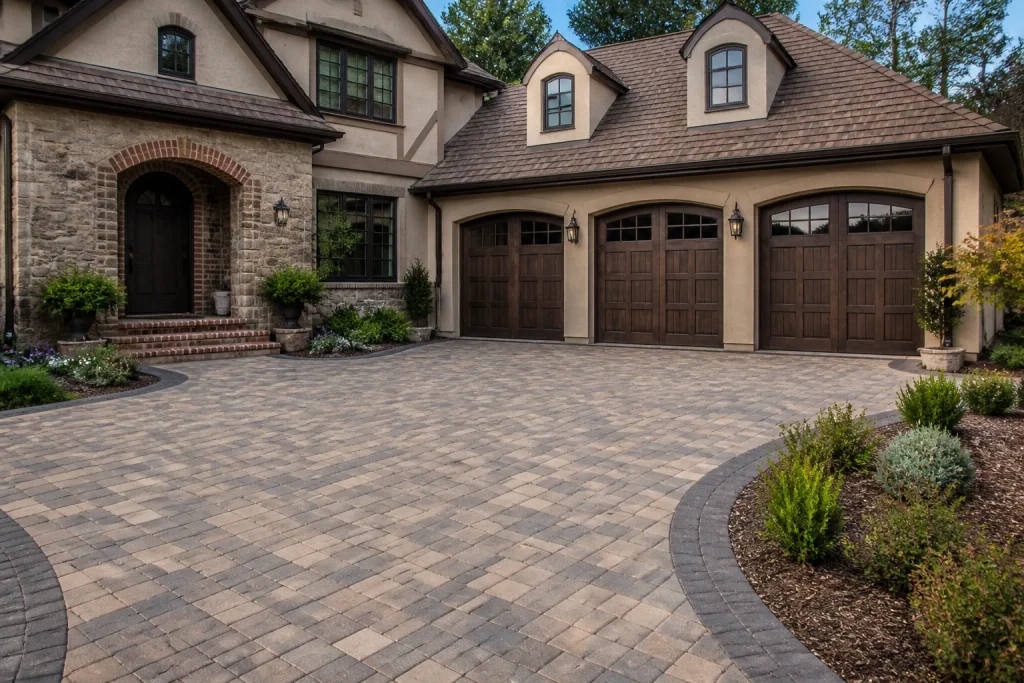
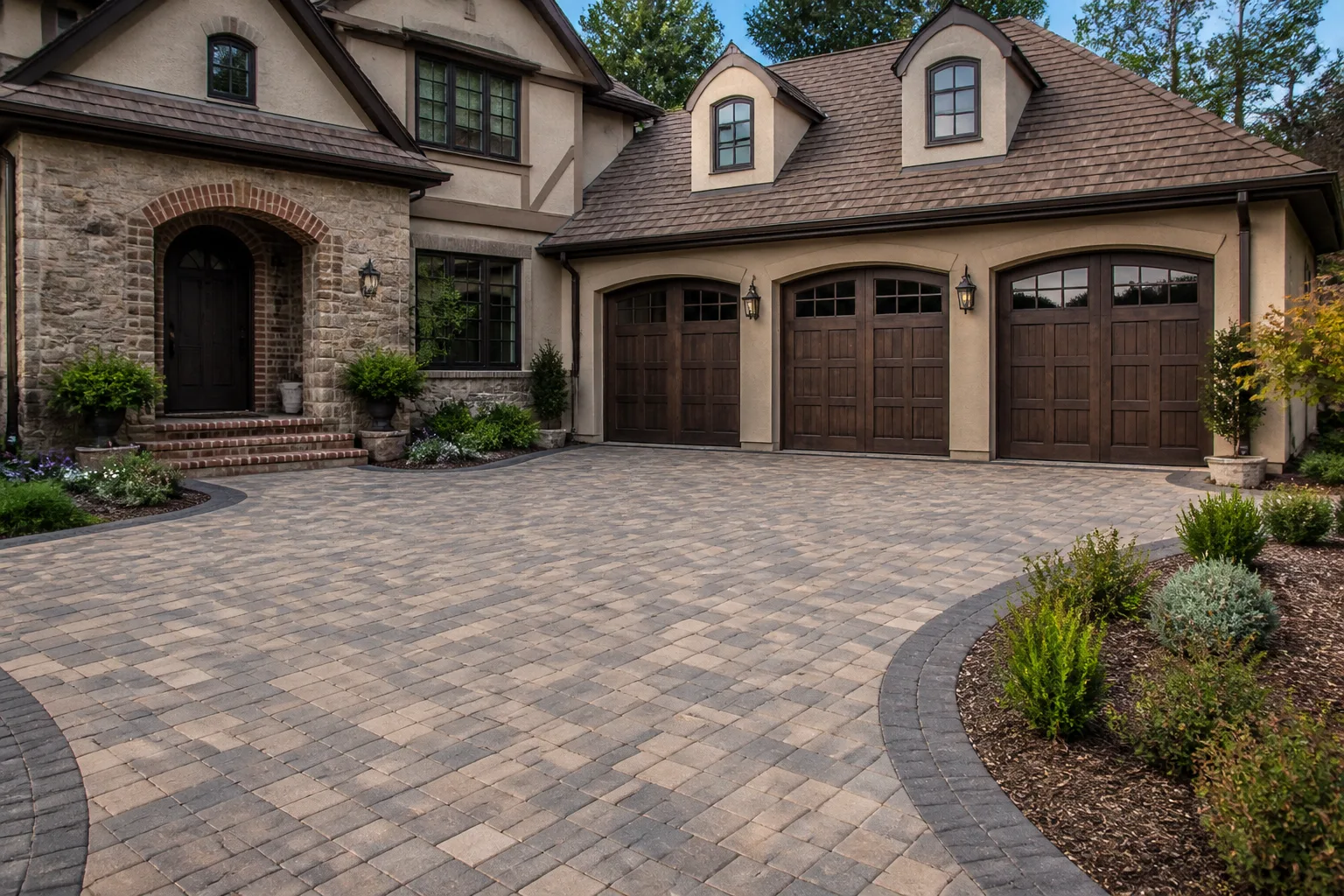
Cover Driveway & Pavers in Santa Rosa: A Homeowner’s Guide
The most common paver failure in Sonoma County has nothing to do with the pavers. It’s the base underneath them. Santa Rosa sits on clay-heavy soil that swells with every wet season and shrinks back in summer, and a driveway built to a national spec sheet will heave, settle, and sink within a few winters. Pavers are the last decision you make, not the first. Before you pick a color or a stone, you answer three questions: what’s the soil, where does the water go, and what slope are you working with.
If you’d rather not sort through soil maps and permit counter visits yourself, call (866) 864-4083 and we’ll walk your driveway and talk it through. Free estimates, and no pressure to sign anything on the spot.
Why Santa Rosa Soil Changes Everything About Paver Base Depth
Most installation guides floating around online assume a stable, sandy subgrade. That’s not what you’re digging into in Santa Rosa. Much of the city sits on expansive adobe and clay soils, and some lots in the eastern hills carry volcanic ash deposits that behave differently again. Expansive clay can move a quarter-inch or more between wet and dry seasons. A base that isn’t deep enough to bridge that movement will transfer it straight up into your pavers.
Standard national specs often call for 4 to 6 inches of compacted aggregate base. On Santa Rosa clay, we’re more often talking 6 to 8 inches, sometimes more, and always with a geotextile separator fabric between the native soil and the base. That fabric stops fine clay particles from pumping up into the gravel and turning your base into mush.
A few site-specific things that get missed:
- Depth matters more than the paver. A $12 paver on a bad base fails. A $5 paver on a properly built base lasts decades.
- Compaction is measurable. Ask what density the base gets compacted to. If the answer is a shrug, keep asking.
- Drainage away from the house. In Santa Rosa’s winter rains, a driveway that pitches toward the garage is a water problem headed indoors.
- Tree roots. Mature oaks and redwoods near a Rincon Valley driveway will find the base layer. Plan for root barriers before the excavator shows up.
We pulled a paver driveway out of a home over in Rincon Valley last spring where the base was barely three inches of un-compacted gravel over straight clay. Every wet season it moved, every summer it settled, and after six years the homeowner had a wavy flagstone pattern they never ordered. The pavers were fine. The base wasn’t.
Slope and Drainage Before Material: The Order That Matters
The single biggest mistake we see on Santa Rosa driveway projects is picking the stone before anyone has thought about where water will go. Material selection should be the last decision, not the first. Here’s the order that actually works:
- Survey the slope. Where does water enter the property, and where does it need to exit? Santa Rosa gets most of its rain between November and March, and it tends to arrive in concentrated storms rather than gentle drizzles.
- Plan the drainage. That might mean a channel drain at the garage apron, a swale along one side, or a permeable system that lets water drop straight through. Sometimes it means all three.
- Check the tie-in to city storm systems. Older Santa Rosa neighborhoods don’t always have a curb inlet nearby. Where the runoff goes matters, and putting it onto a neighbor’s yard is not an option.
- Only then pick the stone. Color, texture, and pattern all matter, but they matter after the water is handled.
Slope also decides your system. A driveway steeper than about 5 percent needs tighter joint sand control, sometimes a hidden edge restraint, and careful transitions at the apron. Skip that planning and you’ll spend every spring sweeping sand back into joints that washed out over winter.
Concrete Sand-Set vs. Permeable vs. Mortar-Set: Which Fits Sonoma County?
Not every paver system belongs on every Santa Rosa driveway. Each one behaves differently in our wet winters, and picking the wrong one for your site is a costly lesson.
- Concrete sand-set is the traditional standard. Pavers lock into a compacted base with sand in the joints. It’s durable, repairable, and works well on flat to moderate slopes with proper drainage. It’s the default we recommend on most Santa Rosa driveways.
- Permeable pavers let water pass through the surface into an open-graded base and then into the soil below. On a Santa Rosa lot with heavy clay, they only make sense if the subgrade drains. Otherwise the water pools under the base and the whole system fails quietly. These systems earn their keep on larger lots with sandy or mixed soils, or where city storm runoff rules require onsite retention.
- Mortar-set looks sharp on entry walks and decorative aprons, but it’s a poor choice for a full driveway in Sonoma County. Mortar cracks with ground movement, and movement is what clay does. It’s also harder to repair. When a mortar joint fails, you’re replacing a slab, not a paver.
Ask any installer what system they’re proposing and why. If the answer doesn’t mention your specific soil, your slope, or your drainage, you’re getting a template. Not a plan.
What Permits Does Santa Rosa Require for Driveway Work?
This trips up a lot of homeowners, so let’s be clear: in most cases, laying pavers over an existing driveway footprint does not require a building permit in Santa Rosa. But expanding a driveway, changing the curb cut, adding a new apron, or altering how stormwater leaves your property usually triggers both city review and, on some lots, a soils report.
When a soils report gets triggered, it’s usually for one of these reasons:
- You’re cutting into a slope or building a retaining wall over a certain height.
- The lot is in a mapped landslide or expansive-soil hazard zone.
- You’re altering drainage patterns that affect neighboring properties.
- You’re expanding impervious surface area beyond a threshold the city tracks.
The Rules aren’t the same on every street. Newer construction in the southwest part of town often has different drainage requirements than an older lot near the Junior College. Our rule of thumb: call the city permit counter before you order materials. If we’re doing the work, we handle that step – permits pulled, inspections signed. The permit inspector works for you, not for me, and that’s exactly why we like him.
If you’re also planning hardscape or structural work around the property, our page on Driveway & Pavers in Santa Rosa covers the broader scope, and if a new garage or shop pad is on your list, our Home Additions & ADU in Santa Rosa page walks through what that layer of permitting looks like.
How to Read a Contractor Bid (Beyond “Pavers and Labor”)
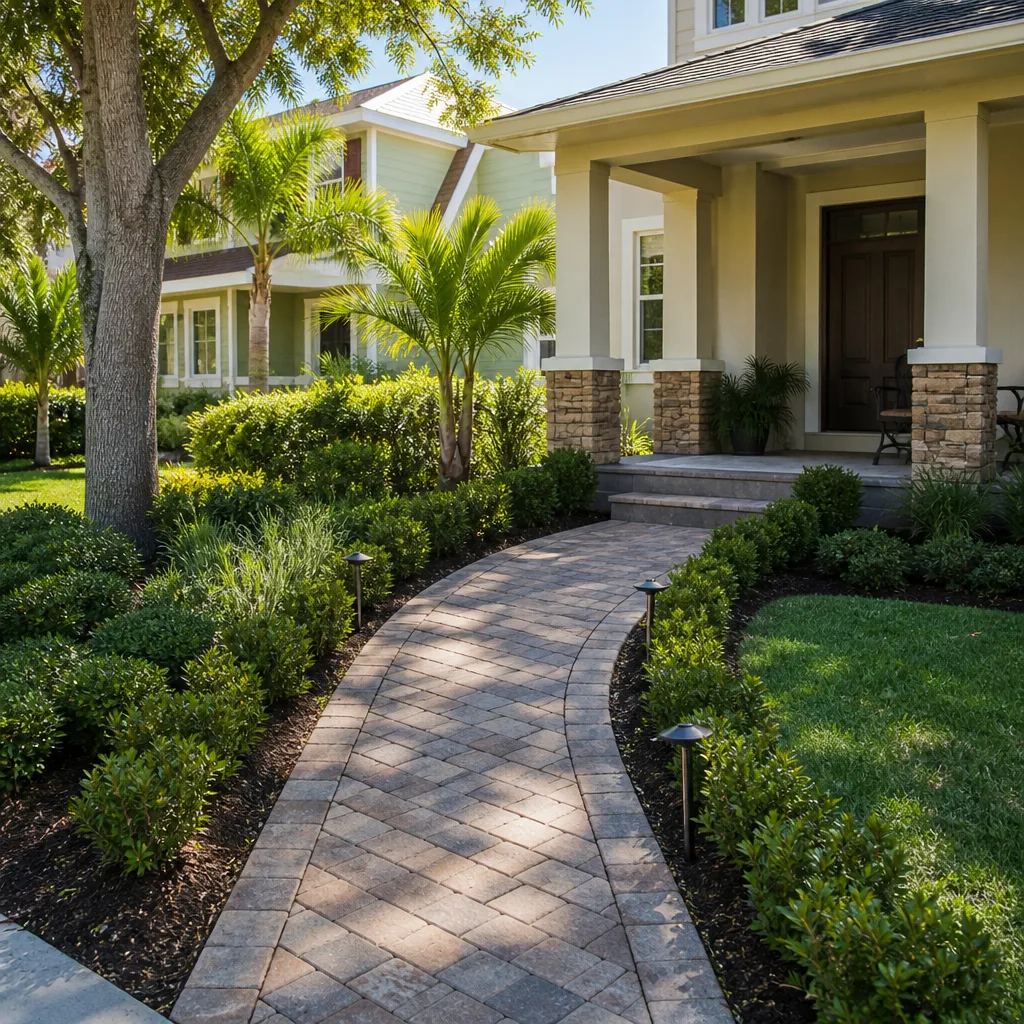
A one-line bid that says “pavers and labor” tells you almost nothing. A real spec sheet should include the following, and any contractor who won’t put these on paper is telling you something by the omission:
- Excavation depth and base thickness, in inches, spelled out.
- Base material spec: what type of aggregate, and its compaction standard.
- Geotextile fabric called out separately.
- Edge restraint type, since this is what keeps the field from spreading at the edges.
- Drainage components: channel drains, pop-up emitters, or infiltration trenches, itemized.
- Paver brand and product line. We install Belgard and Techo-Bloc systems because you can look up the specs and the warranty before you sign anything.
- Joint sand type: polymeric or standard, and why.
- Permit responsibility, in writing.
- Waste haul-off. Old concrete or gravel doesn’t disappear for free.
- Timeline, and what happens to pricing if the base reveals surprises (root issues, buried utilities, or unplanned subgrade repairs).
That last point matters. Subgrade surprises are real in Santa Rosa, and honest contractors price them into a written change order before touching the job. A bid that looks tight and cheap often becomes expensive on day three when the excavator hits something the contractor never priced in.
When to Call a Pro
You can hand-set a small walkway or a patio edge on a flat, sandy lot without too much trouble. A full driveway, a slope over 5 percent, an expansive-soil lot, or anything touching the curb cut, drainage, or city permitting – that’s when the base work needs an experienced hand. The excavation and compaction work is a measured, equipment-heavy job. Getting the base wrong is the single most expensive mistake in paver installation and the one hardest to fix later.
Related services in Santa Rosa: if the driveway work overlaps with a property line, our Fence Installation in Santa Rosa crew can coordinate so the whole yard project isn’t running over itself. Our Barrett & Sons Construction Santa Rosa home page lists the trades we handle, from hardscape to roofing to fencing.
Key Takeaways
- Soil comes first. Santa Rosa clay drives base depth, and standard national specs often fall short.
- Drainage and slope planning come before material selection – always.
- Sand-set systems work on most Santa Rosa driveways; permeable systems need soils that drain; mortar-set is high-maintenance on clay.
- Pavers over an existing footprint usually don’t need a permit; expansions and curb work often do.
- A real bid itemizes excavation, base depth, fabric, edge restraint, drainage, and permits. Not “pavers and labor.”
The best money you spend on a Santa Rosa paver driveway is on the base, the drainage, and the written spec. The stone is the fun part, but it’s the least of the decision. Our crew members have up to 28 years of experience on hardscape installs, and every change order we write lands on paper before a shove hits the dirt. Free second opinion on any written bid, no trip charge inside the county, and a 90-Day Done Right Promise on every job.
The Bottom Line
Covering a driveway in Santa Rosa is a soil, slope, and drainage decision before it’s ever a materials decision. Get those three right and the pavers will outlast you. Get them wrong and the prettiest driveway on the street will look like a boat wake by year four. If you’re planning the project, insist on a base spec, a drainage plan, and a written scope before you sign anything. Ask anyone on your street – or look up the license number yourself.
If you’re in Santa Rosa and want help, Barrett & Sons Construction Santa Rosa offers free estimates – call (866) 864-4083. A live person answers, 24/7. Every eligible job includes permits pulled and inspections signed, and we back the whole thing with our written 90-Day Done Right Promise. Proudly serving local communities for over 29 years.
Frequently Asked Questions
Concrete pavers on a Santa Rosa driveway typically run $12 to $22 per square foot installed, depending on base depth, access, and drainage. Permeable systems run higher because the open-graded base is deeper. Belgard and Techo-Bloc products sit at the upper end. The best way to price your specific driveway is a free written estimate with line items – call (866) 864-4083.
Usually not, if you’re replacing the surface over an existing driveway footprint. Expansions, new curb cuts, and drainage changes that affect adjacent properties typically do require city review, and some lots trigger a soils report. Our crew handles the permitting process on every eligible job; if you’re self-managing, call the Santa Rosa permit counter before ordering materials.
Sand-set pavers use compacted sand in the joints and rely on surface runoff into drains or swales. Permeable pavers have open joints and an open-graded base that let water pass through into the subgrade. Permeable works well on sandy or mixed soils; on clay-heavy Santa Rosa lots, the subgrade has to drain or the water will sit under your driveway. We spec each project by testing the site – not by default.
A properly built sand-set paver driveway in Santa Rosa should hold up 25 to 30 years or more with routine joint sand top-off. The paver itself often lasts longer than that. The base is what determines whether the driveway stays flat. Cheap base work that skips geotextile fabric or proper compaction is the top reason driveways fail early here, and we fix those failures every spring.
Written by the team at Barrett & Sons Construction Santa Rosa.
Need Construction Help?
Call Barrett & Sons Construction Santa Rosa - licensed & insured, here with fast after-hours help in Santa Rosa.
(866) 864-4083