Last updated November 18, 2026






Free written scope consultation - allowances, timeline, and change-order rules on paper before a single trade is scheduled
Construction Warning Signs: A Santa Rosa Homeowner’s Reference Guide
A hairline crack running at 45 degrees from the corner of a window frame is not the same as a vertical crack in that same wall. One is settling and usually cosmetic. The other can be shear stress, and the difference between a $200 caulk-and-patch job and a $20,000 foundation repair often comes down to whether you read the pattern or just see “a crack.” Most warning-sign guides point you at the disasters you’d already notice: water pouring through the ceiling, a wall you can see daylight through. The signs that actually cost Santa Rosa homeowners money are quieter than that. They hide in the crawlspace, in the grading, in wood that looks fine until a screwdriver disappears into it. This guide teaches you to read your house the way a contractor does, so you can spot the small problems before they get expensive.
Quick Answer
The construction warning signs that matter most to Santa Rosa homeowners are subtle ones: the direction of a foundation crack, the slope of soil against the house, the sound of a hollow knock in a door frame, and electrical or framing details that reveal past unpermitted work. Catch these early and you’re looking at repairs in the hundreds or low thousands. Miss them for a few winters and they turn into foundation, rot, and safety issues that run into the tens of thousands. The goal isn’t to panic at every crack. It’s to know which ones your house is telling you to pay attention to.
Styles & brands we work with
- Kitchen remodeling
- Bathroom remodeling
- Home additions & ADU
- Roofing
- Windows & doors
- Driveway & pavers
- Fence
Table of Contents
- Reading Cracks: What Direction Actually Tells You
- Where Water Hides in a Santa Rosa Home
- Grading and Drainage: Read This Before You Ever See a Crack
- Spotting Unpermitted Work Before It Bites You
- Dry Rot: When Wood Stops Being Wood
- Why Permits and Written Change Orders Are Warning Signs Too
- A Santa Rosa Seasonal Walk-Through
- Common Mistakes to Avoid
- When to Call a Professional
- Frequently Asked Questions
Reading Cracks: What Direction Actually Tells You
Not every crack deserves a phone call, but every crack is telling you something. The trick is reading the geometry. A vertical crack in the middle of a plaster wall is usually just settling or a drywall seam doing what drywall seams do as a house moves through its first few years. A diagonal crack that runs from the corner of a window or door opening out toward the ceiling or floor is a different animal. It’s tracking the stress path, and the direction of that track tells you whether you’re seeing shear, settlement, or something load-bearing giving up.
Here’s the visual dictionary we use on site in Santa Rosa:
- Hairline, vertical, mid-wall: Cosmetic or seasonal. Monitor it. No panic.
- Diagonal at a window or door corner: Shear stress at an opening. Worth a professional look if it’s wider than a credit card edge.
- Stair-step cracking in masonry or brick: Settlement of a footing or a jammed foundation. This one moves to the top of the list.
- Horizontal crack in a foundation wall: Often soil pressure pushing inward. Serious and should be assessed.
- Cracks that grow seasonally: Usually soil movement tied to our clay-heavy ground and wet-dry cycles. Track width with a pencil mark and a date.
Cracks in Santa Rosa’s older neighborhoods behave differently than cracks in newer builds on fill. A house from the 1950s on a raised foundation in the West End is going to move in a manner completely unlike a 2015 build on graded soil out toward the edges of town. The single most useful habit you can build is to photograph any crack you notice, date it, and re-photograph it in six months. Movement is the signal. A crack that never changes is usually a crack that can wait.
Where Water Hides in a Santa Rosa Home
Water damage almost never announces itself. By the time you see a stain, the wet has usually been working quietly for a year or more. In our experience going through Santa Rosa homes, there are five places where water hides for years before it becomes visible, and each one has a low-tech way to check it without a moisture meter or a contractor on site.
- Under a window sill: Look at the paint on the interior trim below the sill in our wet winters. Bubbled or soft paint means water is coming in from the exterior, likely through a bad seal or a drip cap that was never installed right. Check it on a dry day after a big rain.
- Behind a tiled shower wall: Press gently on the wall around the shower on the other side. A soft or spongy feel, or a grout line that keeps cracking in the same spot, means moisture is getting behind the tile. The cheap check is a poke with a screwdriver tip into the baseboard in the adjacent room.
- Around chimney flashing: Get in the attic after a hard rain and look for daylight or water stains at the roof penetration. Our Santa Rosa winters find every weak flash every year.
- Under a sliding door: Pull back the plate at the threshold and shine a light at the subfloor. Orange or black discoloration means the pan is failing or was never installed correctly.
- At the base of exterior walls, inside the crawlspace: Look for efflorescence (the white powdery salt deposit) and insect activity on the sheathing. Both mean water has been in there long enough to matter.
If you find anything on that list, don’t wait for spring. The one advantage you have over water is timing. Repairs caught early are usually in the hundreds; the ones caught a couple of seasons late turn into framing, drywall, and sometimes roof work that costs real money. If you’re unsure what you’re looking at, our team at Barrett & Sons Construction Santa Rosa home would rather have the conversation now than after the damage is done.
Grading and Drainage: Read This Before You Ever See a Crack
In Santa Rosa’s clay-heavy soil neighborhoods, the warning sign for a foundation problem shows up in the yard, not in the wall. Clay does one thing with water: it holds onto it, swells up, and pushes on whatever is next to it. Then in a dry August it shrinks back and lets the foundation settle into the gap. That wet-dry cycle is the silent engine behind most of the cracking we end up repairing, and it’s almost always visible from the outside if you know what to look at.
There are four grading clues that predict foundation movement before any crack appears:
- Soil piled against the siding or the foundation ledge. It’s a moisture bridge straight into the wall. A good rule is that the soil should sit at least six inches below any wood exterior and should slope away from the house at roughly an inch per foot for the first six feet.
- Low spots and ponding in the yard. Any place where water stands for more than a day after rain is where you’ll find movement later. Walk your yard after the next storm and take a photo of every puddle.
- Downspouts that dump next to the foundation. The downspout should carry water at least four feet away from the wall. If it dumps right at the corner and the ground is always soggy, you have the beginning of a settlement problem.
- Concrete flatwork that slopes back toward the house. A driveway that was pitched toward the garage rather than the street, or a patio that lifts at the edge, is pushing water back into the wall every winter.
Notice the pattern: none of this involves the foundation itself. It’s all the stuff around it. Fixing the grading and the drainage is the cheapest foundation repair you’ll ever do, and it’s the one most homeowners never do because it doesn’t feel like construction. If you’d like to understand how a properly graded driveway or paver job is supposed to drain, our team covers that in depth in our guide to Driveway & Pavers in Santa Rosa. The short version: water moves away, not sideways.
Spotting Unpermitted Work Before It Bites You
The quietest risk in a home is work that was never inspected. It’s a special problem in Santa Rosa, where our older housing stock has been remodeled over the decades, and some of that work was done by someone whose idea of a permit was a handshake. If you’re buying a house, or if you hired a contractor and want to know what you got, there are specific things you can look for without tearing anything open.
Here’s what a trained eye sees:
- Framing that doesn’t match. Look in the attic. Original framing has a consistent size and a consistent wood grade. When you find two-by-four mixed into a wall that was originally two-by-six, or new lumber with sharp newer edges nailed next to old growth, someone has been in there.
- Missing fire blocking. In the wall cavities of an older house, look for the horizontal blocks that should be between the studs at certain heights. Those blocks are fire-rated and are required by code. If they’ve been removed and never replaced, someone cut them for plumbing or wiring without a permit.
- Electrical panel that doesn’t match its labels. Open the panel and compare the breaker labels to what the breakers actually feed. If the kitchen circuit is labeled but doesn’t kill the kitchen, someone has moved things without updating the panel or pulling a permit for it. Loose or double-tapped breakers are the giveaway that an unlicensed hand did the work.
- Plumbing that wasn’t pressure-tested. Look under the sinks and behind the toilets for shark-bite fittings and no visible cleanout. Those are often signs of a weekend plumber.
- Additions that don’t match the rest of the house. A bedroom, sunroom, or ADU added after the fact usually shows on the property record, and the difference between what’s on record and what’s on the ground will tell you everything. This is often the first warning sign caught during a home purchase, and it’s worth knowing how a proper Home Additions & ADU in Santa Rosa project is supposed to be permitted and inspected from start to finish.
The good news: unpermitted work can almost always be retroactively permitted. The bad news: it takes time, an inspection, and sometimes a fix. Every permit our crews pull is part of why we’ll push back on a homeowner who asks us to skip one. The inspector works for you, not for us.
Dry Rot: When Wood Stops Being Wood
Despite the name, dry rot isn’t dry. It’s a fungus that needs moisture to grow, feeds on the wood, and leaves behind something that looks like wood until you touch it. That’s the trap. Dry rot at the surface just looks like a stain or a dark patch on a fascia board. Dry rot past the surface gets soft, and by the time it looks wrong, the structural strength is already gone. Here’s how to tell how far along it is.
Three tests, in order, that any homeowner can do with their own hands:
- Sound test. Tap the wood with a screwdriver handle or the butt of a tool. Healthy wood gives a sharp, high, solid click. Advanced dry rot gives a hollow, dull knock. The change in pitch is distinct once you’ve heard it.
- Feel test. Press the screwdriver tip straight into the wood. Healthy wood resists. Early rot is tough but yields slightly. Advanced rot lets the tip sink in like wet cake, and that’s when the fix has moved from “treat and seal” to “cut out and replace.”
- Smell test. Real dry rot has a distinct smell: damp, mushroomy, faintly like wet earth and paper. If you smell it under a window or at a door frame in the wet months, the rot is already there and it’s been there a while.
Where this shows up most in Santa Rosa homes: the bottom corners of door frames, the exterior fascia on the north and east sides of the house, and the base of any exterior stairs or deck posts. Those areas get the runoff from the roof and the walls and they stay damp for a long time during our rainy season. A quick walk of these exact spots in October, before the first real rain, catches a lot of problems before they turn into framing repairs. Our team has seen enough of these to know: the ones we cut out in October are always cheaper than the ones we cut out in March.
Why Permits and Written Change Orders Are Warning Signs Too
Not every warning sign lives in the wood. Some live in the paperwork, and they don’t show up until the job has already started. The last contractor most of our customers used told them permits were optional. That’s the single most expensive sentence in construction, and it’s worth understanding why.
When a contractor asks you to skip a permit, three things usually follow. First, the work won’t be inspected, so any code problem stays hidden until you sell or refinance the house and an appraiser flags it. Second, your homeowner’s insurance may decline a claim tied to unpermitted work, which means the money you saved on the permit is money you’re self-insuring. Third, and the one homeowners feel first: when the price changes mid-job, and there’s no written change order, the number at the end is whatever the contractor decides it is.
This is where an allowance that isn’t on paper becomes a surprise waiting for a date. A proper scope, a proper allowance, and a written change order before any price moves are not paperwork chores. They’re the warning signs working in reverse – the reason the final bill matches the estimate. Every job we quote includes a written scope and a written allowance, and any price change arrives as a signed change order before a single nail moves. If a contractor won’t put it in writing, that is the warning sign.
A Santa Rosa Seasonal Walk-Through
The most reliable way to catch the warning signs on this list is to walk your house on a schedule. Four short sessions a year, about fifteen minutes each, will find almost everything that a contractor would find. Here’s what our crews look at each season in Santa Rosa:
- October, before the rain: Walk the exterior and check the soil line against siding, clear the gutters, extend the downspouts, and tap-test the exterior wood at the corners and fascia boards. This is the look that saves you real money.
- January, mid-winter: Get into the attic after a hard rain and look at the chimney, skylights, and any roof penetration. Check the underside of sills and the base of sliding doors. Note any new stains with a date.
- April, after the rain: Re-photograph any crack or stain you noticed in October and January. Compare. Growth is the signal. A crack that never changes is usually fine.
- July, in the dry heat: Check the grading around the foundation, walk the yard for new low spots, and look for new cracks opening up in the dry season. Our clay soil opens up in late summer, and that’s when foundation movement is easiest to spot before it’s a real problem.
Four walks a year. Photos each time. A notebook or a folder on your phone with the dates on them. That’s the whole method. It costs nothing and it’s the closest thing a homeowner can get to a contractor’s eye without hiring one.
Common Mistakes to Avoid
- Panicking at every crack. A vertical hairline crack in drywall is usually cosmetic. Assuming every crack means a $20,000 foundation repair will cost you money in the wrong direction.
- Ignoring the yard. Grading and drainage predict foundation movement in Santa Rosa’s clay soil before any crack shows up. Fix the water and you fix most of the problem.
- Taking a contractor’s word that permits are optional. They aren’t. Unpermitted work is a problem for you at sale and a problem for your insurance claim after a loss.
- Treating surface dry rot with a coat of paint. Paint covers the problem for a season and then it comes back worse. If a screwdriver tip sinks in, the wood has to come out.
- Accepting a verbal price change mid-job. An allowance that isn’t on paper is a surprise waiting for a date. Ask for a written change order before any work continues.
- Assuming a newer house is safe from these problems. Newer builds on graded soil and fill move differently, but they still move. Photograph the cracks in a new house too.
- Skipping the pre-rain walk in October. The week before the first real storm is the cheapest week of your construction year.
When to Call a Professional
Some of what you find on this list is a weekend repair. Some of it isn’t. Call a professional when the diagonal crack at a window corner is wider than a credit card edge, when a stair-step crack appears in masonry, when a horizontal crack shows in a foundation wall, or when a screwdriver tip sinks into a structural post. Call when the grading near the foundation is dumping water into the wall and you can’t fix it with a shovel and a downspout extension. And call before you sign anything from a contractor who won’t put the scope, the allowance, or the change orders in writing. Barrett & Sons Construction Santa Rosa offers free estimates in Santa Rosa – call (866) 864-4083 to schedule yours. Every eligible job we take on includes permits pulled and inspections signed, and every completed job is backed by our written 90-Day Done Right Promise.
Frequently Asked Questions
A diagonal crack running from the corner of a window frame is usually tracking shear stress at the opening, and it’s worth a professional look if it’s wider than a credit card edge or if it’s growing. In Santa Rosa’s clay-soil neighborhoods, these often trace back to seasonal soil movement that can be addressed before it turns into foundation work. Call (866) 864-4083 for a free estimate – estimates are free.
Look for mismatched framing size in the attic, missing fire blocking in old wall cavities, an electrical panel whose labels don’t match what the breakers actually feed, and additions that don’t show on the property record. Any one of those is a strong sign of unpermitted work. If you’d rather have someone look at it with you, our team offers a free second opinion on any written estimate.
Surface dry rot is a stain or a dark patch and the wood underneath is still solid when you press it. Structural dry rot lets a screwdriver tip sink in like wet cake, and at that point the wood has lost its strength and has to be cut out. If a screwdriver tip sinks in more than a quarter inch on a structural post, call a professional.
Often, yes. In Santa Rosa’s clay soil, most foundation movement traces back to water that’s pooling against the wall or draining into the soil line, and correcting the slope and the downspouts stops the cycle that drives the movement. It’s the cheapest foundation repair you’ll ever do. Call (866) 864-4083 for a free estimate on a drainage fix if grading is the issue.
Costs range widely based on what the crack or the grading is actually doing, and we don’t quote a phone number we haven’t seen the job behind. What we will do is look at it in person, put the scope in writing, and every price change arrives as a written change order before work happens. Call (866) 864-4083 – estimates are free.
Yes if the work is structural, electrical, plumbing, or an addition – and a legitimate contractor will insist on it. The permit inspector works for you, not for the contractor, and having the inspection signed protects you at resale and with your insurer. Barrett & Sons pulls every permit on every eligible job, and inspections are signed before we consider the work done.
The Bottom Line

The warning signs that cost Santa Rosa homeowners the most money are the subtle ones: the direction of a crack, the slope of the soil against the wall, the sound of a hollow knock in a door frame, the electrical panel that doesn’t match its labels. Read your house the way a contractor does and you catch the small problems before they get expensive. Walk it four times a year. Photograph anything you notice. Fix the water and the grading first. Put every scope, every allowance, and every change order in writing before the work starts. That’s the whole method, and it’s what we’ve been doing on Santa Rosa jobs for a long time. If you’d like a second set of eyes on your own house, our team is here. If you’d like to see how we handle the repairs themselves – from a properly built Fence Installation in Santa Rosa to full kitchen and bath work – we’d be glad to walk it with you.
Call (866) 864-4083 for a free estimate on any warning sign on this list. A live person answers 24 hours a day, and we’ll tell you straight whether it’s a weekend job or something that needs a crew.
Written by the team at Barrett & Sons Construction Santa Rosa.
See the difference
 Before
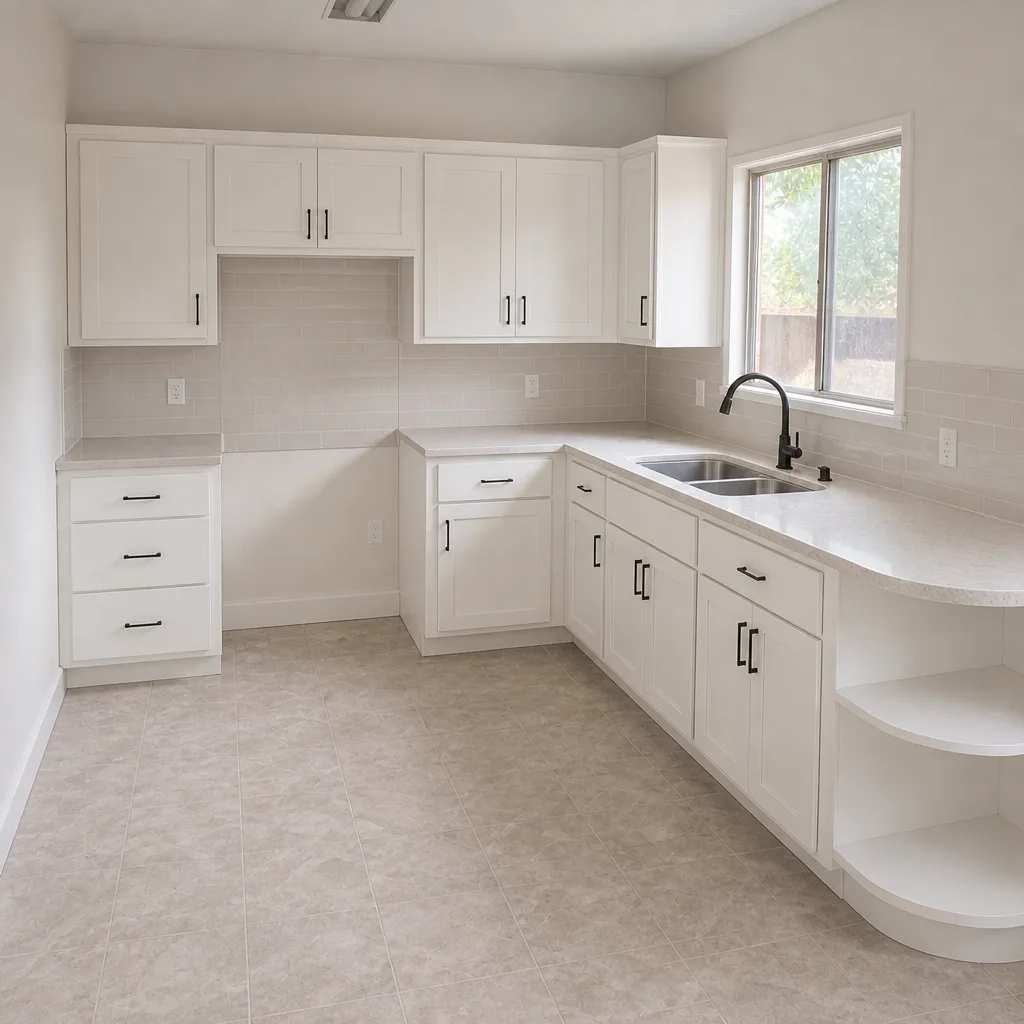 After
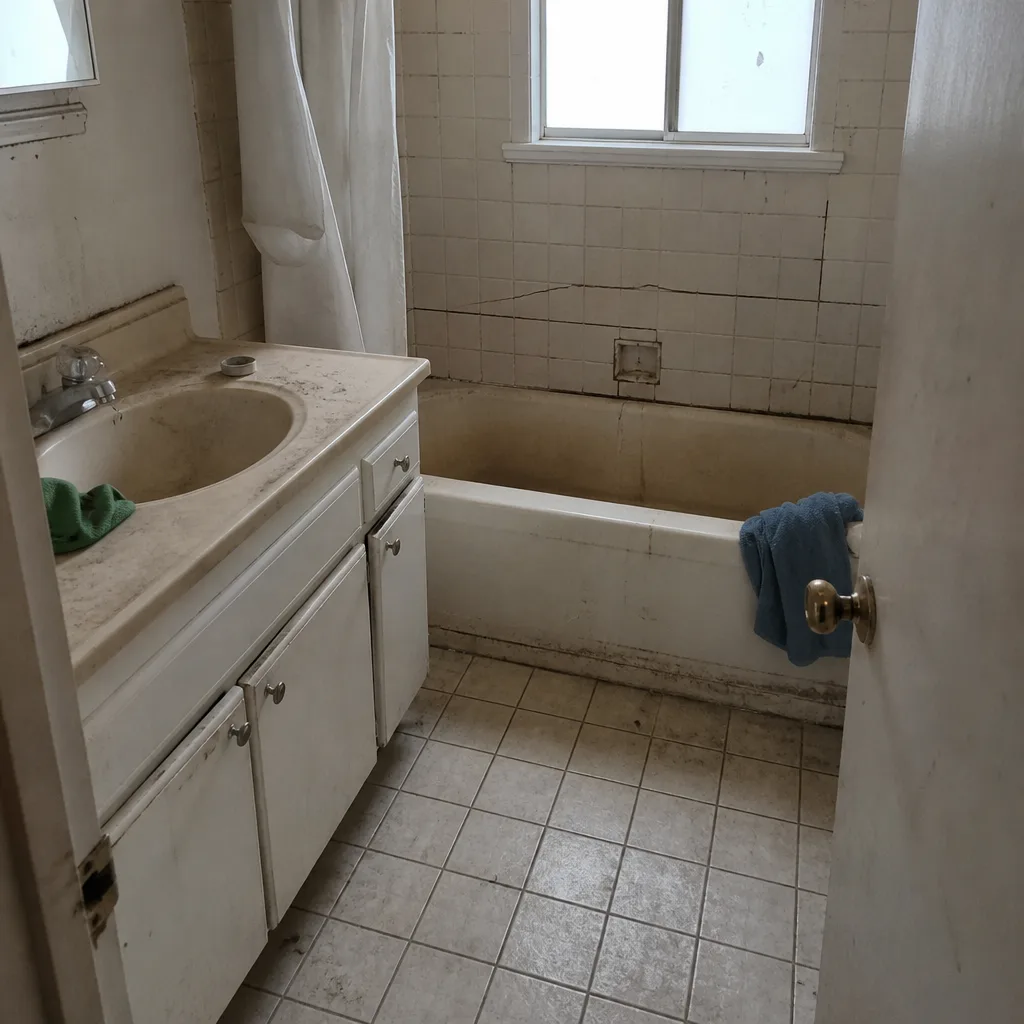 Before
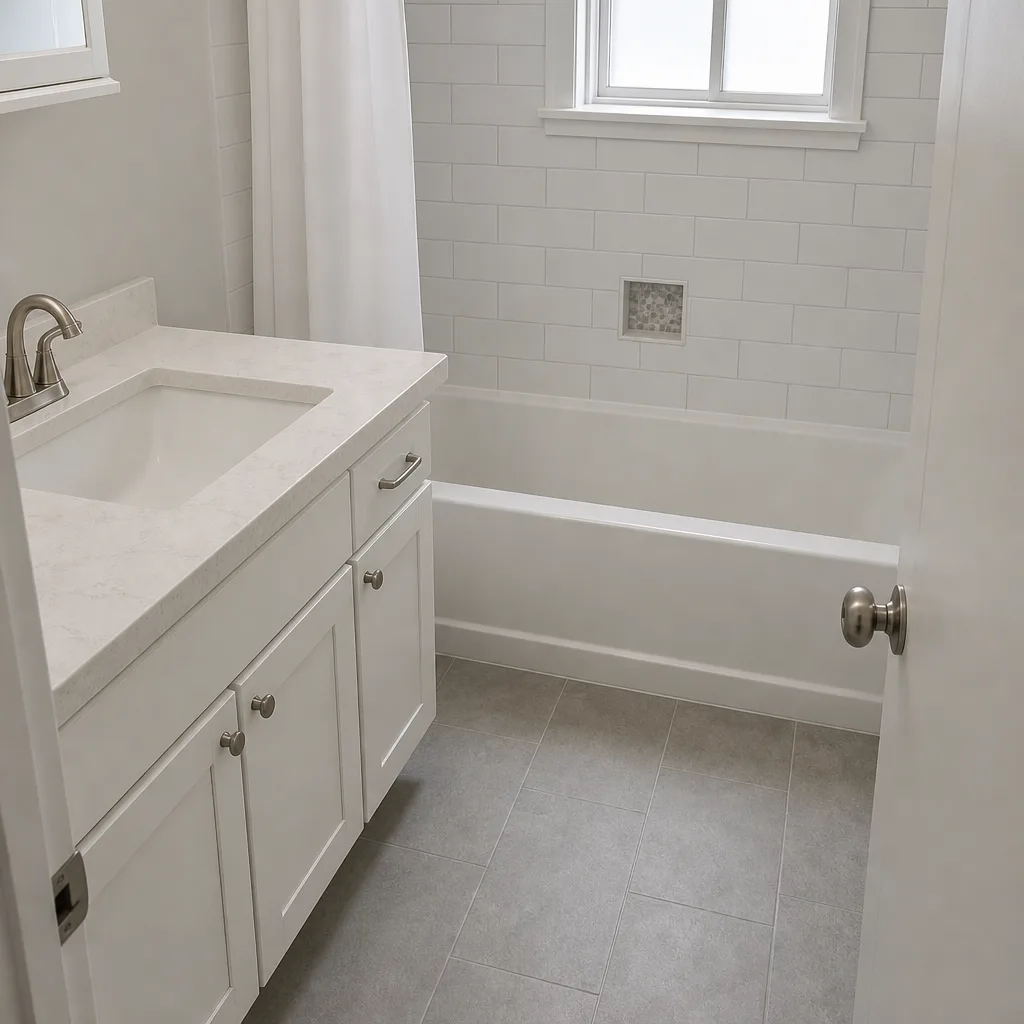 After
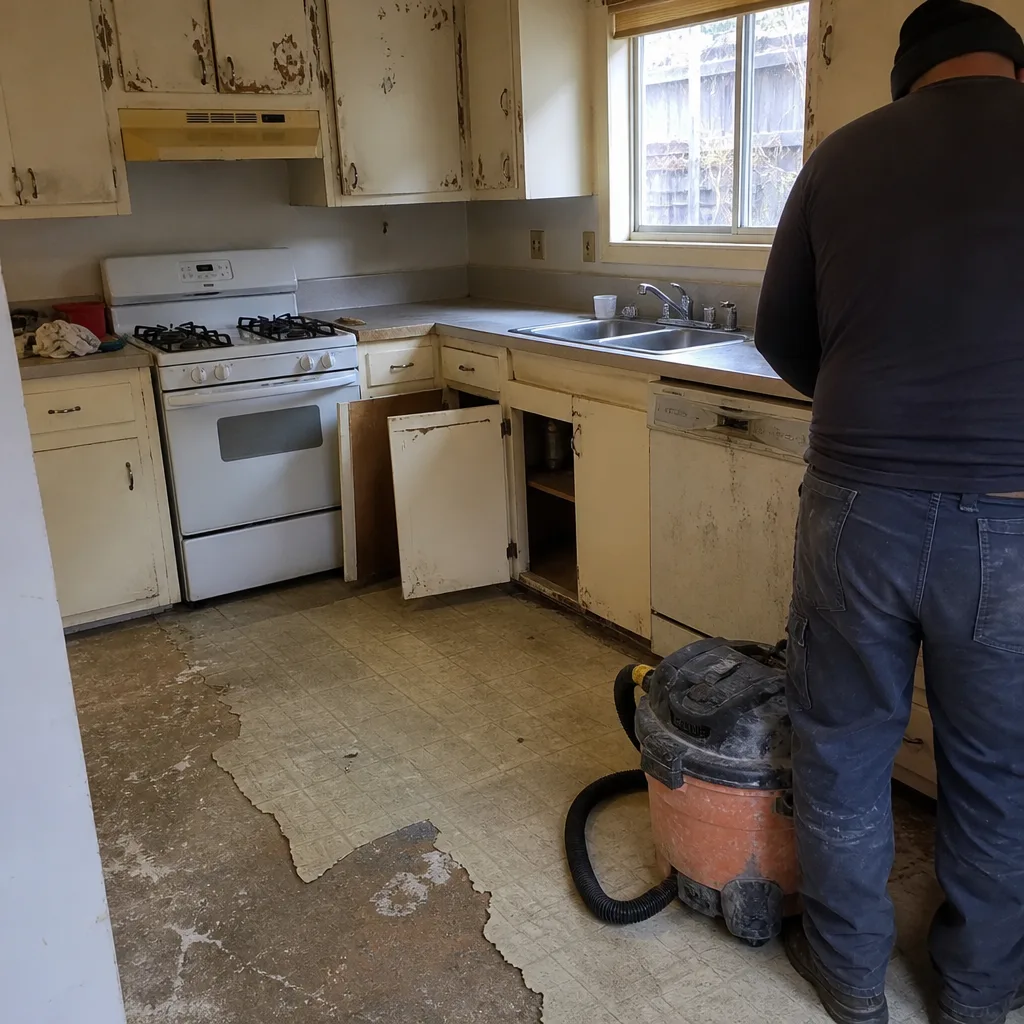 Before
 After